
Top 10 Paper Plate Manufacturers in India, Sorted by What Buyers Actually Need
"Top" has no subject, and that is the whole problem
Every list like this fails the person who signs the purchase order, because rank without a buyer profile is just search-engine decoration. A Rotterdam importer needs a conformity certificate stapled to the shipping file. A Jaipur distributor needs forty thousand pieces in twelve days on sixty-day credit. A quick-service chain needs a 250 gsm plate that holds hot gravy for twenty minutes without the base bowing. Those three buyers will not agree on a single name in the top three. So read the ten below as a map of capability clusters rather than a podium. Every one is a real, verifiable Indian manufacturer, and none of them is right for everybody.
The export-facing converters
Hindustan Paper Products runs out of Narela in Delhi, has been converting for over forty years, and ships printed plates, tag-board plates and buffet dinner plates into Africa, the Middle East, Eastern Europe and North America. Their catalogue breadth is the point: if you need one container mixing four formats, they can fill it. Cara Disposable Company in Surat, working since around 2015, built its line around eco-friendly plates and trays and holds the retail-facing certifications buyers ask for first. Sun Fine Arts in Sivakasi is the one to know if printing quality decides the order, because they came up as printers before they became converters, and it shows in registration on full-bleed designs. For an importer assembling a printed paper plate supply program, those three cover most of what a first container needs. Set Cambay Foodservice Packaging in Surat as your benchmark even though plates are only a slice of their 250-plus SKU paperboard range, because at 25,000 square metres and 150 containers a month out of Hazira, they define what export-grade Indian board conversion looks like. 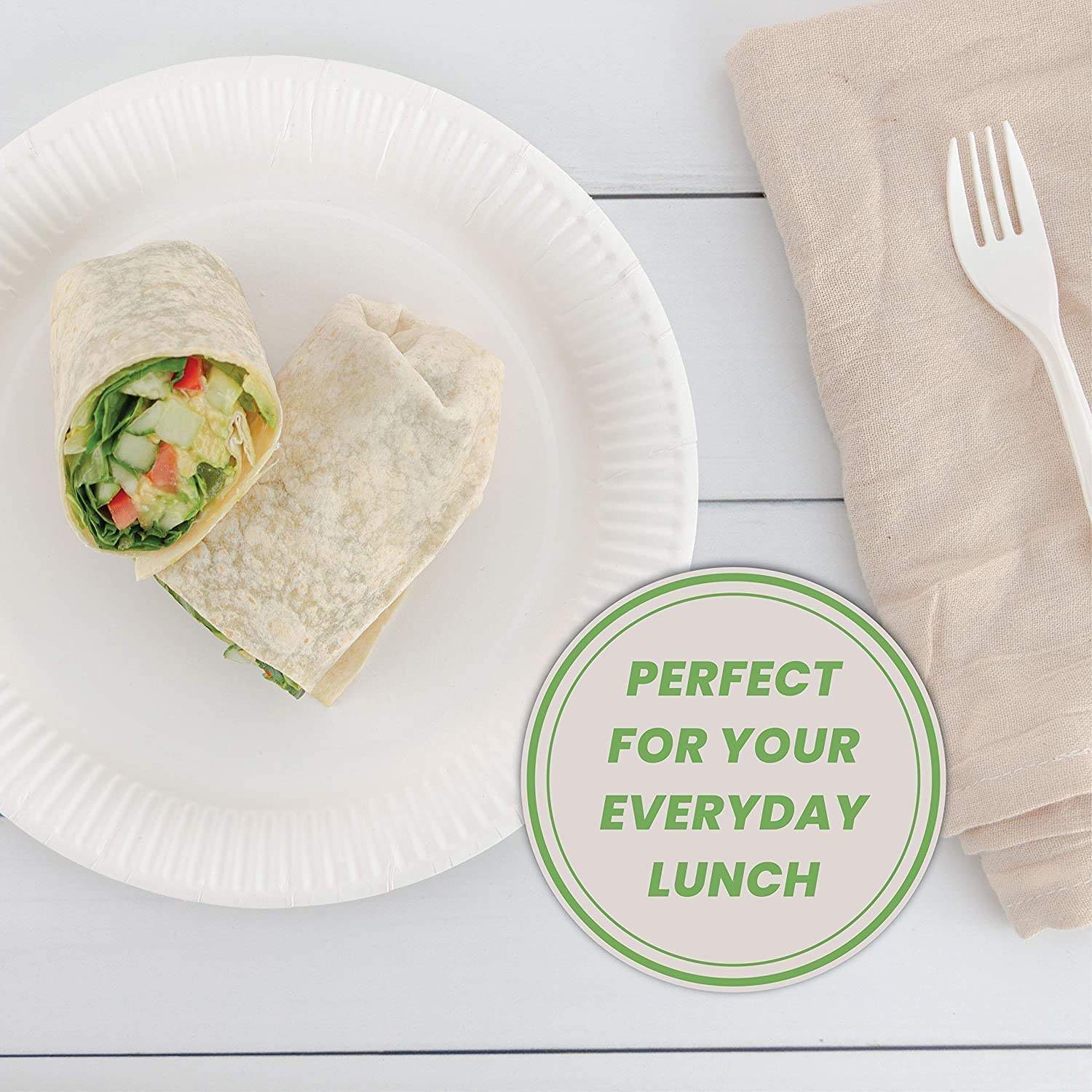
The silver and coated specialists
Three units do almost nothing but coated plates, and they are cheaper per piece than anyone above because they are not carrying a printing department. Shivam Paper Product in the Rajkot belt has been quoting silver-coated ten-inch plates since 2013 at minimums starting around a hundred thousand pieces. PSJ Enterprises in Coimbatore, young but focused, runs 80 to 180 gsm across six to ten inch formats and exports from Tamil Nadu. Sri Pon Polymers in Sivakasi sits at the useful edge with PLA-coated 200 gsm stock, which is where a European buyer's specification usually lands now. Sai Enterprise near Valsad has spent eight years on wrinkle-finish and mirror-finish silver plates for the event trade. Any coated paper plate supplier serving bulk buyers in this group will quote fast and quote low, and you should assume the grammage claim needs cutting and weighing before you trust it.
The brand-facing printers
Sri Bharath Groups, selling under the Simha Mark label out of Sivakasi, is the clearest example of a unit built for print runs rather than container volume, which makes them the natural first call for a private label paper plate production partner testing a design. Pattalwala, at Maksi in Madhya Pradesh, took the opposite route: 250 gsm stock, plates from seven inches up to seventeen-inch thali, ISO 9001 in hand, and a catalogue aimed squarely at caterers who need the plate to survive a wedding service. Balaji Enterprise in Ahmedabad has been exporting printed plates since 2002 and sits between the two. What separates this cluster from the silver specialists is not price but willingness to hold your artwork, your tooling and your brand on the rim.
The fibre-adjacent group
Garvit Green Industries in Panipat and Crystal Green Product in the Gondal belt both began in bagasse and now quote paper formats alongside it, which matters more than it sounds. If your specification might migrate from coated board to moulded fibre once the PFAS conversation reaches your customer, these are the units that can follow you across without a new supplier qualification. Bagazo Ecocare in Morbi is the same story at smaller scale. Treat them as a compostable tableware factory supplying importers who have not yet decided which substrate they will be selling in two years, and treat the pure board converters as the ones who cannot. 
Filters that should remove a candidate before you score anything
Before ranking, check documents. Domestic supply requires an FSSAI manufacturing licence, and export requires a conformity certificate from an NABL-accredited lab under the 2018 packaging regulations. Ink should follow IS 15495, and no printed surface should sit against food, which rules out full-colour direct print on the contact face no matter how the ink gets described to you. An IEC code and current RCMC prove the unit can export at all. Every food-grade paper plate contract manufacturer worth a second call will state the coating system in plain words, polyethylene, water-based or PLA, and give coat weight in grams. Vagueness there is not modesty, it is a cost variable they would rather you didn't see.
What a plant visit should actually record
Skip the shed area and the headcount. Look at the board store first, because grammage sorted into labelled zones with no damp patches means the supplier understands what they are selling, and mixed unbranded stock means the quoted 300 gsm is an average of whatever was cheap that week. Ask whether the coating line is in-house or the paper arrives pre-coated, since that one answer moves both cost and lead-time flexibility. Count forming stations, and check whether moulds are made internally, because in-house tooling turns a diameter change into days instead of months. Then look at semi-finished stacks for edge fuzz and compression marks, at cartons for fixed counts and batch labels, and at the reject bin to see whether scrap goes back into the pulper. Blended reclaim is the usual reason a plate smells when hot food hits it. 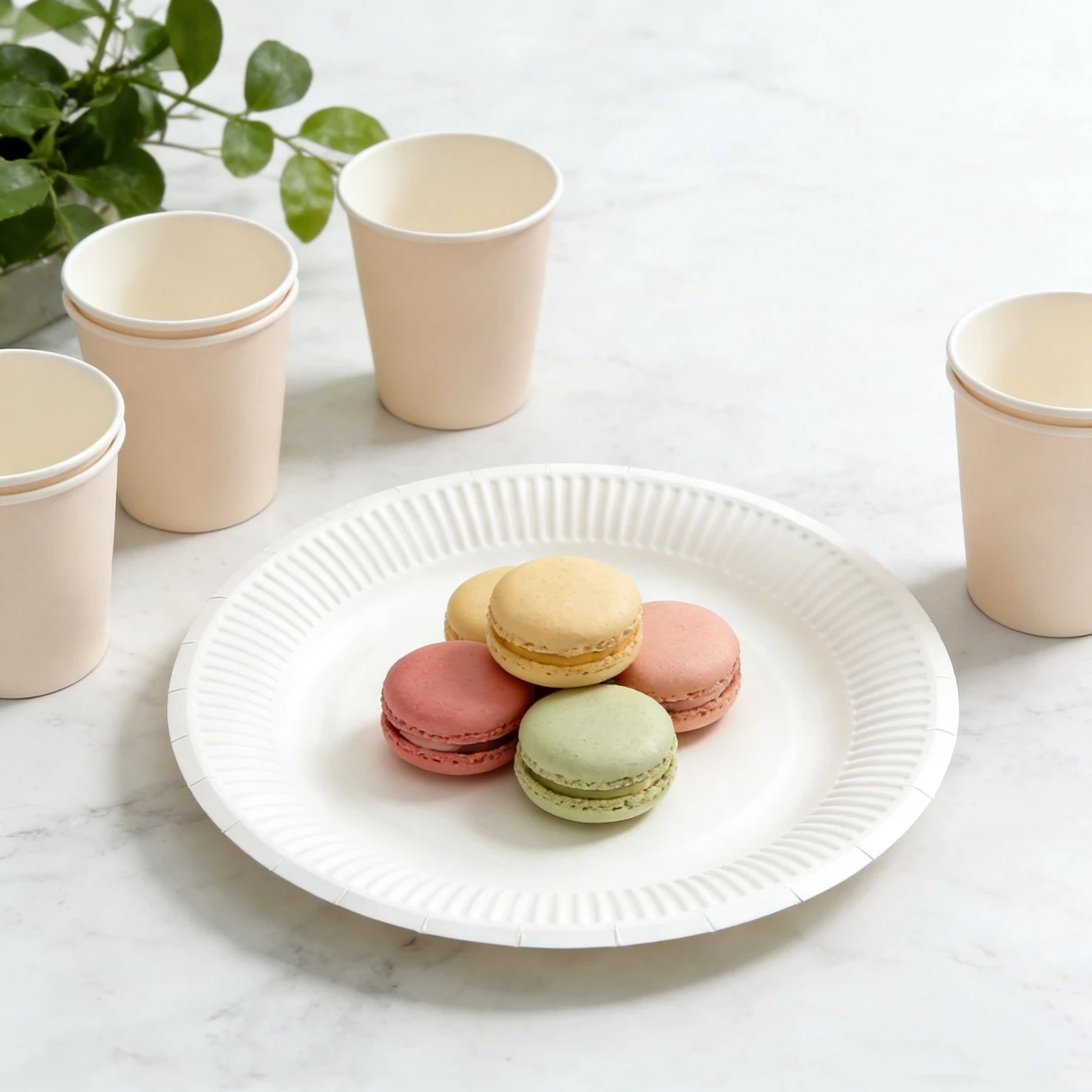
The protocol to send before the RFQ
Attach the test schedule to the enquiry and say plainly that failing items end the quotation. Cut a hundred square centimetres, weigh it, then repeat on a second sample from the same carton. Pour water at ninety to ninety-five degrees and check at fifteen and thirty minutes for blistering, seepage and base sag, then repeat with hot oil. Fold a rim a hundred and eighty degrees, immerse it, and inspect the crease. Stack ten pieces and compare diameter and depth, because stack tolerance decides your carton count. Send one set out for migration, heavy metals, fluorescent whiteners, PFAS and pentachlorophenol. A serious paper plate wholesale supplier to distribution networks will welcome all of this, and anyone who refuses retain samples has told you something without meaning to.
Four flags worth walking away from
A price fifteen per cent under market with no explanation of board origin. ISO 9001 offered as a food safety credential. Certificates sent as photographs with the number cropped out. A website that ranks itself first in its own top ten. Two is a pattern, three is a no.
The honest question was never who occupies positions one through ten. It is which five factories fit the way you buy, and what evidence you hold on each. Send the protocol and the commercial sheet before you negotiate the price, and the shortlist makes itself.