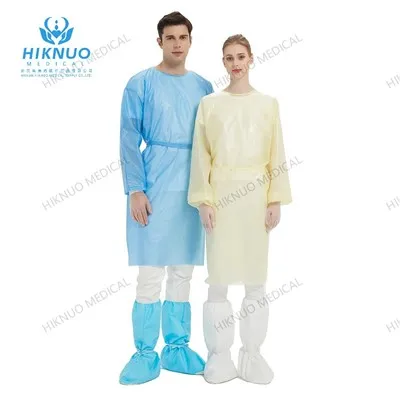

We believe that the success of building long-term relationships with our customers depends not only on providing the right product at the right price, but also on continuously improving reliability. Our vision is to be a global healthcare company that is customer-focused and committed to excellence.
-
![SMS Short Sleeve Hospital Patient Gown]() SMS Short Sleeve Hospital Patient Gown
SMS Short Sleeve Hospital Patient GownA patient own provides your patients with opacity and discreetness during hospitalisation, as it is manufactured from a soft, non-woven SMS fabric.
-
![Disposable Lab Jackets]() Disposable Lab Jackets
Disposable Lab JacketsDisposable lab coats are manufactured with strong, lightweight, breathable, 100% non-linting, non-woven, spunbond polypropylene fabric.
-
![Disposable PP Lab Coat]() Disposable PP Lab Coat
Disposable PP Lab CoatDisposable PP lab coats are manufactured with lightweight, breathable, 100% non-linting, non-woven, spunbond polypropylene fabric.
-
![Disposable Medical Scrub Suit]() Disposable Medical Scrub Suit
Disposable Medical Scrub SuitMedical Scrub suits are the sanitary clothing worn by physicians, nurses, and other workers involved in patient care in hospitals.
-
![PP Scrub Suits]() PP Scrub Suits
PP Scrub SuitsDisposable scrub suit are made of polypropylene, a material associated with lower air and wound bacterial contamination than conventional cotton shirts and trousers .


Why choose us
Advanced Production Equipment
Our manufacturing factory is equipped with advanced heat sealing machines, sewing machines, cutting machines, cast film production lines, laminating machines, mask machines and other equipment. They have passed international certifications (ISO, CE, FDA, etc.) and are frequently subject to internal and third-party inspections.
High Quality Standards
Our products use high-quality materials and manufacturing processes to provide you with protection you can trust. We have established a strict quality control system in accordance with ISO 13485 and FDA related standards to ensure that all our products meet and exceed high quality standards.
Variety of Products
Our products include non-woven protective equipment, disposable masks, disposable isolation gowns, disposable hats, disposable shoe covers, disposable boot covers, etc. They are widely used in medical, dental, industrial, laboratory, health and beauty markets.
Professional Service
Our company is committed to building customer partnerships through strong relationships, providing high value, quality products and exceptional service through continuous process improvement. In addition, our products have been sold to more than 40 countries around the world and enjoy a good reputation in domestic and foreign markets.

Disposable hospital apparels are disposable garments used to protect the body from contamination during medical procedures. These garments may be worn for a few hours or overnight and then discarded, so they do not require cleaning. These garments are particularly useful when patients are at high risk for infection, such as those with compromised immune systems, cancer, or other conditions that cause serious infection risk. They usually come in a variety of sizes, including extra-large, large, medium, and small, to accommodate a variety of body types.
Benefits of Disposable Hospital Apparels
Infection Control
Disposable hospital apparels are crucial for infection control and preventing the spread of infections within healthcare facilities. They act as a barrier to protect healthcare workers and patients from contact with bodily fluids, pathogens, and contaminants. This is particularly important in environments where patients may have infectious diseases.
Hygiene and Sterility
Disposable hospital apparels are manufactured under controlled conditions to maintain hygiene and sterility. They come individually packaged, ensuring that each apparel is free from contaminants until it is used. This is essential in surgical settings, where maintaining a sterile field is critical.
Convenience
Disposable hospital apparels are convenient because they do not require as much maintenance as reusable gowns. Healthcare facilities can save time and resources by using disposable gowns, as they can be discarded after use without the need for cleaning or disinfection.
Reduced Risk of Cross-Contamination
Disposable surgical apparels help reduce the risk of cross-contamination between patients. After each patient encounter or procedure, healthcare workers can discard the gown, ensuring that potentially contaminated clothing does not come into contact with others.
Ease of Supply and Inventory Management
Healthcare facilities can easily manage their apparel supplies by ordering pre-packaged disposable apparels. This simplifies inventory management and ensures that apparels are readily available when needed.
Environmental Considerations
While disposable hospital apparels are made for single-use and generate waste, they can be designed to minimize environmental impact. Some apparels are made from materials that are biodegradable or recyclable. Additionally, the water and energy savings associated with not laundering reusable gowns can offset some of the environmental concerns.
Flexibility
Disposable apparels come in various styles and materials to suit different healthcare applications. This allows healthcare providers to choose gowns that meet specific needs, such as fluid resistance or protection from particulate matter.
Compliance with Regulations
Healthcare facilities are often required to follow regulatory guidelines and standards for infection control. Disposable apparels are a reliable way to meet these requirements and maintain a high level of patient safety.
Features of Disposable Hospital Apparels

Reliability
Reusable scrubs can wear down over time due to repeated use and laundering. On the other hand, disposable hospital apparels such as single-use, disposable scrubs and gowns are made with durable material and are not subject to the effects of reuse, transport, storage, laundering, and decontamination. Disposable gowns supplied by a professional manufacturer are also less subject to incidental factors such as getting lost or damaged.
Prevent Cross-Contamination
Quality disposable apparel can also stand up to the many substances that healthcare workers routinely encounter. This means disposable scrubs are effective for Standard and Transmission-Based Precautions. Most importantly, disposable scrubs help prevent cross-contamination. Going from patient to patient wearing the same scrubs can spread illnesses. Wearing disposable scrubs overtop of your clothing and properly disposing of them after each patient helps contain contaminants before they spread to laundering service workers, your own home, or other patients.


Low Cost
At least two studies have found that disposable surgical scrubs are actually less expensive when compared to reusable options. While a strong economic case can't be made for either option with current data, it appears that the price of disposable apparel is competitive compared to reusable options. Individual healthcare facilities may perform cost analyses to understand exactly how reusable versus disposable scrubs would impact the organization financially.
Comfort
Advances in textiles and materials have helped disposable scrubs become much softer and more comfortable than previous options. Research has indicated that breathability and temperature levels are in many cases comparable to reusable options. Of course, personal preference is a factor to be considered. It's possible that hospital staff members would be more open to switching to disposables if they are made aware of newer standards of comfort now available on the market.

Disposable Hospital Apparels Specifications
|
Product Name |
PP Scrub Suits |
|
Country of Origin |
China |
|
Size |
M,L, XL, XXL,XXXL Or Customized |
|
Type |
Class 1 |
|
Stitching method |
Ultrasonic suture or sewing |
|
Packing specification |
Case size: 55*50*30cm |
|
Material |
PP |
|
Color |
Blue/green |
|
OEM |
Accept OEM |
|
Application |
Safety Protection |
|
Logo |
Customized Logo Accept |
|
Sample |
Sample Offered |
|
Weight |
35g |
|
Country of Origin |
China |

Level of Risk for Disposable Hospital Apparels
When choosing disposable hospital apparels, look for product labeling that describes intended use as well as the desired level of protection based on the risk levels described below.The FDA standard’s ultimate goal is to assist end-users in identifying the type(s) of the protective product(s) that are best appropriate for a specific task or situation:
Level 1: Minimal risk, the standard’s ultimate goal is to assist end-users in identifying the type(s) of the protective product(s) that are best appropriate for a specific task or situation. Resistant to all kinds of fluid and contaminants.
Level 2: Low risk, to be used in situations such as blood draws, suturing, the Intensive Care Unit (ICU), or a pathology lab. Resistant to all kinds of fluid and contaminants.
Level 3: Moderate risk must be utilized, for example, during an arterial blood draw, an intravenous (IV) line placement, in an emergency room, or in trauma cases. Resistant to all kinds of fluid and contaminants.
Level 4: High risk, this is used during long, fluid-intensive operations, surgery, pathogen resistance, or infectious disease suspicion (non-airborne). Resistant to all kinds of fluid and contaminants.
What do the Different Color Scrubs Mean in a Hospital?
In a hospital or healthcare setting, the color of medical scrubs often conveys specific roles and responsibilities. While these color codes can vary from one institution to another, some general color meanings are commonly recognized:
Blue Scrubs: Often worn by surgeons and operating room personnel, blue scrubs represent cleanliness and are easily distinguishable in the sterile environment of the operating room.
Green Scrubs: Green scrubs are frequently worn by surgical team members other than surgeons, such as nurses and surgical technologists. They help create a contrast with the surgeon's blue scrubs.
White Scrubs: White scrubs are often associated with doctors, though their use can vary. Some healthcare facilities require all staff to wear white, while others reserve them for specific roles, like physicians.
Different Colors for Departments: Some hospitals use different colors for various departments. For example, pediatric units may use colorful scrubs to create a welcoming atmosphere for children, while emergency department staff might wear black or navy scrubs for easy identification.

How to Put on a Hospital Patient Gown
There are two main types of hospital gowns: a straight up-and-down style and a wrap style. If you have the straight up-and-down style gown, it will have two panels that meet in the middle on one side. Most patients put this side in the back because having it in the front makes them feel more exposed, but in some cases, the doctor will have you put it on with the gap in the front for easier access. There is also a wrap style hospital gown that features two fabric panels that overlap at an angle. This style offers more coverage for patients but can reduce access for medical practitioners and hamper quick action. Each style of hospital gown requires slightly different directions for donning it, which is why it’s important to know which type of gown you will be wearing.
Before you can put on a hospital gown, you need to take off your clothes. In many cases, you will be able to leave on your bra and/or underwear, unless otherwise noted by the doctor. If the doctor is only examining your top or bottom half, you might be able to leave on your shirt or pants and then simply drape the hospital gown over the rest of your body. Follow the staff’s instructions for how much to disrobe before putting on the hospital gown. Place your clothing where they direct you to so you can easily find them later when it’s time to take off the hospital gown.
Now, it’s time to actually put on the hospital gown. If you are wearing a straight up-and-down gown, then grab it and turn it so it completely covers your front (unless your doctor has instructed you to wear it otherwise). Slip your arms into the sleeves and pull the gown up to your neck. If you have upper body mobility, tie the neck strings behind your head. If your arms aren’t mobile enough, then you can tie it in front of your chest and then slip the strings over your head. You may wish to tie the waist strings behind you if you are going to be walking around. Some people prefer to leave the waist strings untied if they will be lying down because, otherwise, the knot can dig into their lower back.
Wrap gowns are a bit different because they don’t have a neck tie but they do have two waist ties. Slip into the hospital gown with the gaps facing the front. Locate the inside waist tie, which will be on the inside of either your left or right. Take the tie on the edge of the opposite side of the garment and attach to the inner waist tie. Locate the outer waist tie on the other side of the garment and repeat the process with the other side that is still hanging free. If the wrap gown only has one long inner tie, then bring it around and tie it to the string on the opposite side. Adjust the overlapping panels of fabric so that they hang comfortably.
Common Types of Material Used in Disposable Hospital Apparels

Spunbond-Melblown-Spunbond (SMS)
Spunbond-meltblown-spunbond (SMS) materials are multi-layered fabrics, commonly used in medical gowns, face masks, drapes, and sterilization wraps. They are made of 100% Polypropylene. The manufacturing processes for spunbond and meltblown non-wovens both start with a process called spun-melt, but then diverge to yield different types of fibres with different properties. Spun-melt creates nonwoven webs by heating thermoplastic polymers (e.g., polypropylene, polyester or nylon) and extruding them through a metal plate with a spinneret. This extrusion process is like a garlic press where the materials are pressed through a grate to create string-like fibres.

Spunbond Nonwoven Polypropylene
Spunbond fabrics are produced by extruding a melted polymer through a spinneret to form long thin filaments. These filaments (5 - 20 um diameter) are collected on a moving conveyor belt, where they form a fibrous web. The web of nonwoven fibres is then passed between two heated rollers, which thermally bond the web together to give it better strength and durability.

Meltblown Non-woven Spunbond Polypropylene
Meltblown nonwovens start off with a spun-melt process like that of spunbond fibres. However, the process after filaments are extruded from the spinneret is different. The extruded fibres are immediately subjected to high-velocity hot air streams coming from both sides of the spinneret. Although made from the same raw stock as spunbond Non-woven Spunbond Polypropylene, the structure of the meltblown material, and the size of the fibres are different. Meltblown fabrics have many ultrafine fibres for a given weight and create fabrics with large surface areas, which yields excellent filtration properties as well as good insulating properties. However, meltblown NWPP tears easily is harder to sterilize and may pose an inhalation risk.

Polyethylene (PE)
Polyethylene is a very useful plastic and is used as a fibre to make such items as medical gowns Polyethylene is a lightweight, durable thermoplastic with a variable crystalline structure. Low-Density Polyethylene (LDPE) is a very flexible material with unique flow properties that makes it particularly suitable for gowns and other plastic film applications. LDPE has high ductility but low tensile strength, which is evident in the real world by its propensity to stretch when strained.

Polypropylene (PP)
This is a single layer of polypropylene nonwoven fabric. It is a soft fabric-like cloth that allows for low fluid exposures. Additionally, it acts as a barrier to harmful agents. Polypropylene is a plastic that comes in many varieties that has the added benefit of being the least harmful to the environment. Polypropylene, a polymer that is inert and environmentally friendly is gaining popularity across industries. PP fabrics are resistant to bacteria and other microorganisms. It is also highly resistant to mildew. Additionally, polypropylene fibers are difficult to ignite. They can be ignited but are not combustible. It can be made flame retardant by adding certain additives.

Polyethylene Coated Polypropylene
The PP stands for polypropylene which is a thermoplastic. It is strong and can generally withstand high temperatures. Polyethylene is also a thermoplastic very similar to polypropylene. When the spun-bond polypropylene is combining with PE coating (polyethylene), it offers an extra barrier to chemical resistance and waterproof performance. This standard fabric is for protection against microbial particulates and lighter fluid in non-toxic workplaces and grim work environments.
6 Jobs That Call for Disposable Apparels
Maintaining, inspecting, and extending the life of your personal protective equipment (PPE) is a hot topic. But despite all this talk about prolonging the usable life of our equipment, sometimes the best option is disposable gear that can be destroyed immediately after using it. Sounds strange, right? Why would you spend money on PPE just to toss it away after using it? While it may not sound like the most fiscally responsible thing to do it, it's often the only way to ensure the safety of your workers and the public. Let's look at some of the jobs that call for disposable clothing so you can see what I mean.
HAZMAT Operations
Many people have only seen HAZMAT suits on television and in the movies. But if your job is to clean up biological agents, radioactive materials, and chemicals that have leaked into the environment, these suits are a daily reality for you. These full body protective outfits protect you against any number of toxins you can be exposed to while carrying out your work. HAZMAT suits come in various levels of protection, the highest being a Level A that involves a gas-tight, vapor-tight, splash-resistant suit and a self-contained breathing apparatus (SCBA). Chemical-resistant gloves (both inner and outer) and footwear are also required, with emphasis on the need for puncture-resistant materials to protect against cuts that could allow toxic materials to reach the skin.
Chemical Laboratories
You need special protective equipment when handling chemicals, so it makes sense that you'd need quite a bit of protection when you're involved in manufacturing them. Employees in chemical laboratories need protection not only from the chemicals they're working with, but also from the agents used to clean up spills. Disposable protective gear in chemical laboratories also ensures the quality of the product. Putting on a fresh piece of protective clothing prevents accidental contamination of the raw chemicals and compounds being developed. Chemical lab employees work with any number of elements that could be toxic. Gloves, coveralls, and eyewear are essential in these workplaces. Obviously, the more toxic or fragile the chemicals, the more protection is necessary.
Health and Medical Professions
Doctors, nurses, and other medical staff require disposable protective gear to prevent contamination and the spread of disease. Imagine if a surgeon were to operate on one patient and then ran over to treat another one without changing their gloves. You don't need medical training to know that is trouble waiting to happen. It's not just about contaminating patients, though. Medical teams often work on patients with contagious diseases and need to make sure they don't contract it themselves. Protective gear has come a long way since the sadly ineffective plague masks worn by physicians in the Dark Ages, but we haven't yet found a way to make sure diseases don't spread without items that can be discarded.
Food Service
We've all heard horror stories about things that go on in restaurants. But there are fewer and fewer mishaps when food handlers use hair nets, gloves, and other disposable items. Hair nets aren't only for the head anymore, either. Nylon beard nets are now an option to control facial hair and prevent contaminating the food. Every level of food service uses disposable clothing. Even school cafeterias have adopted disposable gloves and hair nets when handling student lunches. Nursing homes, hospital cafeterias, and fast food restaurants have also gone well beyond "Employees Must Wash Hands" signs and made sure that anyone prepping the food slips on disposable gloves before starting their work.
Medical Device Manufacturing
How sanitary wound a syringe be if it were handled by every single person on the production line? What about IVs and catheters? Would you want to use one of these medical devices if it had been touched by any number of strangers? Probably not. Medical device manufacturers fall somewhere between the health and medical field and chemical laboratory teams. They need to keep the items sterile while also avoiding being injured by the materials they're working with. Aprons, eyewear, gloves, and even disposable shoe covers can be required depending on the type of device being manufactured.
Forensic Investigation
If you've ever watched a crime show, you're familiar with the scene of the forensic team pulling on a pair of disposable gloves before bagging up key items and even collecting hair and fiber samples. It doesn't take an expert to know why they do it: if their fingerprints or DNA gets all over the scene, it can compromise the evidence they collect. But it's more than that, isn't it? Of course. Forensic teams may need to wear disposable shoe covers and other clothing items in case they come into contact with toxins and other hazards. After all, who knows what those criminal operations keep lying around.
How to Correctly Wear Disposable Hospital Apparel
Do hand hygiene before wearing disposable medical protective clothing, change personal clothes and wear work clothes, remove personal items such as jewelry, watches, mobile phones, etc., wear work shoes or rubber boots, and wear disposable work caps.
●Correctly select the model of medical protective clothing.
●Correctly select the size of medical protective clothing.
●Read the instructions and precautions before wearing.
●Unfold the medical protective clothing (with the hood facing towards you and the opening facing up).
●Open the neck, chest and legs of the medical protective clothing, put on the jacket and fasten the belt.
●Wear waterproof shoe covers.
●Wear other protective equipment suitable for the face (wear protective head shield or face shield or goggles).
●Wear protective gloves.
●Check the suitability of protective clothing.
How to Remove Disposable Hospital Apparel Correctly
●Removal location and preparation before removal.
●Wipe and disinfect the outer layer of personal protective equipment when there are visible pollutants.
●Take off the outer latex gloves.
●Take off protective clothing (when taking off the sleeves, retract your hands into the cuffs and grasp the inner sleeves, put your hands behind your back and take off your gloves and coat, then put your hands into the waist of your pants and turn them outward to take off your pants).
●Remove the eye shield.
●Remove the medical protective mask.
●Remove the disposable gloves on the inner layer.
●Wash your hands.
●Change back to personal clothes.
●Dispose of used protective clothing. The disposable medical protective clothing is a sanitary product, which can only be used once in principle. In order to avoid cross infection, do not reuse the disposable protective clothing.
Precautions
●Pay attention to the relevant laws and regulations when discarding protective clothing, and dispose of the protective clothing that cannot be used any more according to the classification of medical waste.
●When taking off the protective clothing, the contaminated bread should be wrapped inside, and the protective equipment should be disposed centrally to avoid further pollution.
●In case of working in an isolated and closed environment, at least two persons shall be present at the same time, in case of any emergency, they can be rescued in time.
●Pay attention to check the integrity of the protective clothing, such as whether there is pollution on the surface, cracks at the seams, or sharp objects on the body, so as to avoid damage to the protective clothing during the work process and affect the protective function.
●Before wearing protective clothing, you must do relevant inspections and do not just rely on your own experience.
Our Certificate
Our company has obtained the following certificates:

Our Factory
The following are our factory:

Frequently Asked Questions
Q: What is a disposable hospital apparels?
Q: What are disposable patient gowns?
Q: What is a disposable PP patient gowns?
Q: SMS and PP disposable patients gowns, which is better?
Q: How should disposable patient gowns be cared for and disposed of?
Q: What are the benefits of a scrub suit?
Q: What is the intended use of scrub suit?
Q: What are scrub suits made of?
Q: Is scrub suit sterile?
Q: How should a scrub suit fit?
Q: What is an SMS lab coat?
Q: How often should lab coats be washed?
Q: Can I wash my lab coat with other clothes?
Q: How often should SMS lab coats be replaced?
Q: What is flame retardant laboratory jacket?
Q: Are cotton lab coats flammable?
Q: Do lab coats have to be 100 percent cotton?
Q: Are patient gowns reused?
Q: Are thumbloops important to have on a medical gown?
Q: Is the fit of an patient gown important?
We're professional disposable hospital apparels manufacturers and suppliers in China, specialized in providing high quality products and service. We warmly welcome you to wholesale customized disposable hospital apparels made in China here from our factory.
SMS Short Sleeve Hospital Patient Gown