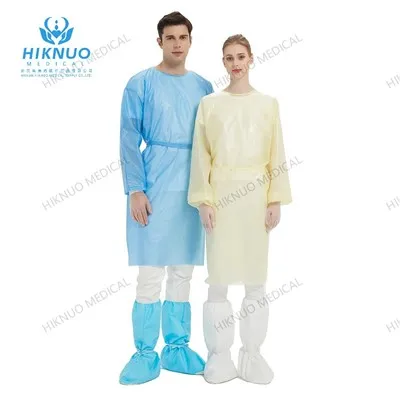

We believe that the success of building long-term relationships with our customers depends not only on providing the right product at the right price, but also on continuously improving reliability. Our vision is to be a global healthcare company that is customer-focused and committed to excellence.
-
![Disposable Non-Woven Isolation Gown Round Neck, Knitted Cuffs, And Waist Ties,Yellow Color]() Disposable Non-Woven Isolation Gown Round Neck, Knitted C...
Disposable Non-Woven Isolation Gown Round Neck, Knitted C...Our disposable yellow isolation gown is made of high-quality non-woven fabric, designed to provide reliable protection in medical, industrial, and public settings. Featuring a round neck, knitted...
-
![Disposable CPE Gown]() Disposable CPE Gown
Disposable CPE GownCPE Gowns, also known as disposable gowns, are an isolation gown made up of CPE fabric (chlorinated polyethylene).
-
![SMS Disposable Lab Coat]() SMS Disposable Lab Coat
SMS Disposable Lab Coat
SMS disposable lab coat in 30–60gsm — 3-layer spunbond-meltblown-spunbond, AAMI PB70 Level 1–3, knit cuffs, snap or zip front, S–5XL. Test reports, low MOQ, free samples. -
![SS Disposable Lab Coats]() SS Disposable Lab Coats
SS Disposable Lab Coats
SS disposable lab coats made from spunbond nonwoven fabric for laboratories, food processing, cleaning and industrial applications. Custom sizes, colors and packaging available. -
![White CPE Isolation Gown]() White CPE Isolation Gown
White CPE Isolation Gown
White CPE gowns for food processing — FDA food-contact compliant, grease and oil impervious. -
![Blue CPE Isolation Gown]() Blue CPE Isolation Gown
Blue CPE Isolation Gown
Blue CPE isolation gowns with thumb loops — impervious, latex-free, AAMI Level 1–2, individually wrapped. 40/45/50gsm, universal to XXL. Low MOQ, free samples. -
![AAMI Level 4 Disposable Surgical Gowns]() AAMI Level 4 Disposable Surgical Gowns
AAMI Level 4 Disposable Surgical Gowns
Level 4 Disposable Isolation Gown is developed for situations where healthcare workers may face heavy exposure to blood, body fluids, and contaminated liquids. The gown uses a PP non-woven... -
![AAMI Level 3 Disposable Isolation Gown]() AAMI Level 3 Disposable Isolation Gown
AAMI Level 3 Disposable Isolation Gown
AAMI Level 3 Disposable Isolation Gown are produced to meet AAMI Level 3 requirements and have passed high-pressure liquid penetration testing. This supports use in settings where... -
![AAMI Level 2 Disposable Isolation Gown]() AAMI Level 2 Disposable Isolation Gown
AAMI Level 2 Disposable Isolation Gown
**SMS three-layer protection**
**AAMI Level 2 performance**
AAMI Level 2 Disposable Isolation Gown is a general balanced-type gown: more protective than basic Level 1 options... -
![AAMI Level 1 Disposable Isolation Gown]() AAMI Level 1 Disposable Isolation Gown
AAMI Level 1 Disposable Isolation Gown
Soft PP Non-Woven Material
Manufactured with polypropylene spunbond non-woven fabric for a lightweight feel, good breathability, and comfortable contact with clothing or... -
![Standard Coverall]() Standard Coverall
Standard CoverallStandard coveralls are made with spunbonded polypropylene or SMS.elastic hood, cuff, waist, leg and boot allow unrestricted work perfor-mance and make it easier to put on over work clothes. It's...
-
![Lab Coat]() Lab Coat
Lab CoatMade with fluid resistant SMS /SS with Knitted collar and knitted cuff which offerbetter comfort to wear under it's protection from fluid, dirt, splash and bacteria.The pockets on the coat offer...


Why choose us
Advanced Production Equipment
Our manufacturing factory is equipped with advanced heat sealing machines, sewing machines, cutting machines, cast film production lines, laminating machines, mask machines and other equipment. They have passed international certifications (ISO, CE, FDA, etc.) and are frequently subject to internal and third-party inspections.
High Quality Standards
Our products use high-quality materials and manufacturing processes to provide you with protection you can trust. We have established a strict quality control system in accordance with ISO 13485 and FDA related standards to ensure that all our products meet and exceed high quality standards.
Variety of Products
Our products include non-woven protective equipment, disposable masks, disposable isolation gowns, disposable hats, disposable shoe covers, disposable boot covers, etc. They are widely used in medical, dental, industrial, laboratory, health and beauty markets.
Professional Service
Our company is committed to building customer partnerships through strong relationships, providing high value, quality products and exceptional service through continuous process improvement. In addition, our products have been sold to more than 40 countries around the world and enjoy a good reputation in domestic and foreign markets.

As personal protective equipment, disposable isolation gowns are designed to protect the wearer from the spread of infection or illness. The gowns serve two purposes: to protect healthcare workers from potential contaminants and to prevent healthcare workers from transferring microorganisms that could harm vulnerable patients. An isolation gown is a standard form of protective clothing worn by medical professionals, patients, and visitors. They are typically made of disposable materials, such as non-woven fabric, and are worn in situations where there is a risk of contamination, such as emergency room.
Benefits of Disposable Isolation Gowns
Provide Protection to Healthcare Providers from Infections
A disposable non-woven gown protects the healthcare provider from infections by keeping his skin clean from harmful substances. If a doctor does not wear a sterile gown, he could accidentally contaminate his patients during a surgical procedure. After completing medical procedures these gowns are intended to be thrown away, as it can reduce the risk of cross-contamination to a great extent.
High Filtration of Dust and Bacteria
Disposable non-woven gowns have low surgical infection rates and have characteristics of high filtration of dust and bacteria. Moreover, these isolation gowns are easy to use, hygienic, and can effectively prevent hospital-borne cross-infection. Every disposable isolation gowns should have long sleeves, covering the body from the front and back and from the neck to the thighs. All healthcare professionals should know how to put on properly and take off PPE safely, including the non-woven isolation gown.
Protect Both Patients and Medical Professionals
Disposable non-woven gowns can keep doctors and patients safe from the transfusion of viruses and other potentially harmful chemicals or substances. By wearing a non-woven disposable gown, healthcare professionals are less likely to be exposed to harmful viruses and bacteria. This significantly reduces the likelihood of any infections occurring during surgery, which can lead to serious complications.
Make it Easier to Treat Everyone
Patients that healthcare professionals treat can come with any number of complications. That’s why in order to easily treat them, one needs to be properly prepared. Non-woven disposable gowns have made it easier for medical professionals to examine any part of an individual’s body. It is also more comfortable than normal street clothes for people who need to lie down for extended periods of time. Disposable isolation gowns can be worn by all healthcare workers in all healthcare settings, including acute care, ambulatory care, long-term care, and home care. Disposable isolation gowns can either be reusable or disposable.
Features of Disposable Isolation Gowns

Adjustable
In addition to mid-body ties, the disposable isolation gown provides additional adjustability and flexibility to better fit the gown to different body types. The sleeves are equipped with knitted cuffs on both ends for better retention and to prevent foreign objects from entering through the sleeve ends.
Good Protection
Disposable isolation gowns provide an excellent barrier to fluids and microorganisms. It fully covers the wearer's front and back, and Velcro at the back of the neck makes donning and securing the gown easier. Because its material has good liquid resistance, it is widely used in food processing and medical services.
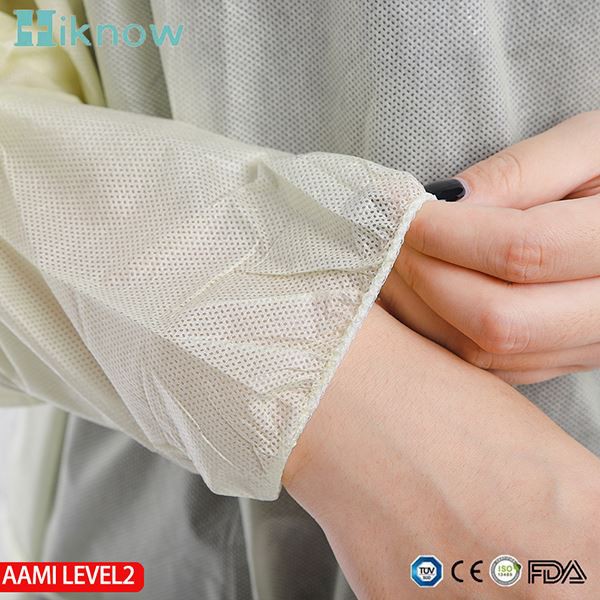

Light Weight
Because the non-woven fabrics are made from a soft and breathable material, they are not only lightweight but also breathable, meaning the wearer is better able to balance their body temperature. It provides the wearer with greater comfort when doing manual work.
Available in Various Sizes
Disposable isolation gowns prevent the leakage of any body fluids such as mucus, blood, pus, etc. They are most widely used in medical settings. Many manufacturers offer isolation gowns in a variety of sizes and colors to suit your needs.
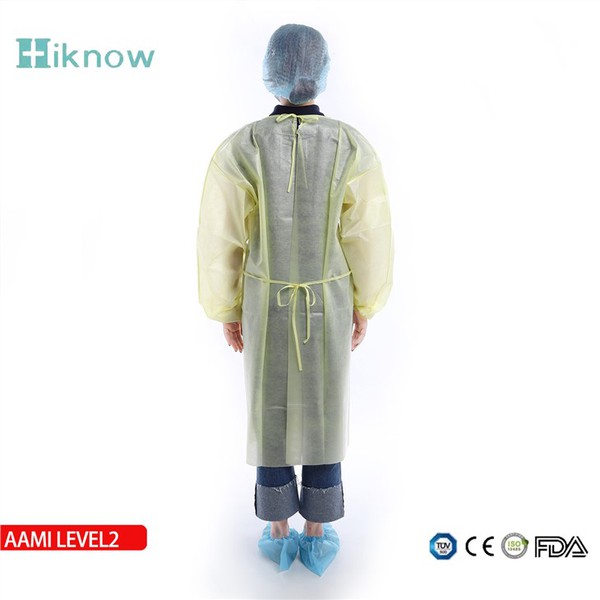
Disposable Isolation Gowns Specifications
|
Product Name |
PP Isolation Gown |
|
Country of Origin |
China |
|
Cuff style |
Elastic cuffs |
|
Size |
XL 120x140cm |
|
Type |
Class 1 |
|
Stitching method |
Ultrasonic suture |
|
Packing specification |
Case size: 52*38*30cm |
|
Material |
PP |
|
Color |
Blue/yellow |
|
OEM |
Accept OEM |
|
Application |
Safety Protection |
|
Logo |
Customized Logo Accept |
|
Sample |
Sample Offered |
|
Weight |
22g |
Correct Steps for Disposal of Disposable Isolation Gowns
Removing an isolation gown is called doffing. Taking off an isolation gown in a proper manner is also necessary in order to minimize the risk of spreading infection. You can take off your isolation gown by following these steps:
Sanitize Your Hands
In order to sanitize your hands properly, try to scrub them thoroughly for a few seconds to ensure contaminants are removed. Medical workers often wear gloves when they remove their isolation gowns.
Untie at the Waist
In order to untie the gown, pull the shoulders down to break the neck closure and loosen the gown around the upper torso. After that, release the waist ties and free this gown around the sides of your body.
Roll the Gown
Roll the gown by pulling it away from the sleeve until the arms are bunched at the wrists. After that, roll the exposed and potentially contaminated side of the gown inward until it is formed into a ball.
Dispose of the Gown
Depending on the facility, there might be a specific method for disposing of isolation gowns.

Types of Disposable Isolation Gowns
Level 1 Disposable Isolation Gown
This type of gown is used in minimal risk scenarios or routine hospital situations, such as essential care. Hospitals often stock these items for visitors. While these gowns can protect the wearer from fluids to some extent, they are not suitable for procedures such as blood draws or in ICU facilities.
Level 2 Disposable Isolation Gown
They are used in low-risk medical scenarios such as blood draws or worn in pathology labs and ICUs where sterile gowns are not required. These items undergo rigorous fluid resistance testing. Compared to Level 1, they are much more effective at preventing liquid penetration that may occur due to splashing or immersion.
Level 3 Disposable Isolation Gown
These gowns can be used in moderate-risk medical situations. For example, drawing blood from an artery, inserting an intravenous (IV) line, or managing a traumatic event in the emergency room (ER). Like Level 2 suits, they have been thoroughly tested to ensure effective protection against the spread of liquids and infection from splashes and immersion.
Level 4 Disposable Isolation Gown
They can be used in high-risk medical settings. These are suitable for use in operating rooms where medical professionals use sterile equipment and devices to perform surgeries. They are made using disease control fabrics that have been specially tested to stop the penetration of fluids and viruses for up to one hour. During testing, Level 4 suits are exposed to simulated virus-contaminated blood. Scenarios for their use include fluid-intensive surgeries, surgeries, and when pathogen resistance is required for potential infectious diseases.
Tips for Using Disposable Isolation Gowns
●Manufacturers whose gowns conform to AAMI standards must test their completed gowns thoroughly for proper barrier protection. This gives hospitals and medical professionals better peace of mind when donning a gown. Although isolation gowns do not usually have a shelf life, it’s safer to throw out old stock and buy new ones if you suspect the elastic or plastics in a gown may be brittle or otherwise compromised because of old age. Reusable isolation gowns also require frequent inspection of ties, fasteners, cuffs, seams, and other critical parts that are more vulnerable to wear and tear.
●If wearing an isolation gown for an extended period during surgery or while assisting the same patient, take the time to check the front of the body for damage periodically. Although isolation gowns are strong, they are not completely immune to snags and rips caused by patient bed frames or equipment. Even a small gap in the gown can result in contact with blood or other bodily fluids that could be infectious.
●Keeping the largest stock of isolation gowns possible makes it easier to deal with supply chain interruptions and serious emergencies. During the pandemic, hospitals consistently saw their stock of PPE decreasing, with insufficient shipments available from manufacturers. Even hospitals with large PPE stocks ran out, especially if they were caught off-guard at the very beginning of the pandemic.
●Although pandemics are rare, influenza outbreaks and even mass casualty events may cause a sudden spike in PPE usage. Keeping a minimum of a 30-day supply on hand makes it easier to deal with sudden events and resulting supply chain interruptions. Large hospital systems with major trauma wards should consider keeping an even larger supply. When on-site storage is limited, consider contracting with a storage provider for more space for your backup emergency supply.
●Also remember to stock an adequate range of sizes and types of PPE. Gowns that are too large or small can interfere with staff members’ mobility, which in turn affects their job performance. Since isolation gowns should not be altered by hemming or rolling up the sleeves, having the proper size is essential.
●Coveralls are more difficult for medical personnel to change in and out of, but they are essential for very high-risk infectious disease protection. Plus, they can easily be used in place of other Level 4 gowns in the event of a shortage. Even if your facility rarely encounters infectious diseases, keep a supply on hand so you can be prepared to serve your community in a crisis.
●Many high-level isolation gowns are reusable, which helps reduce the strain on your supplies during a shortage. Although there is a limit to how many times they can be reused, high-quality reusable gowns usually last for dozens of washes. However, thin disposable gowns cannot be washed and must be thrown out even if they are not soiled. Even isolation gowns that are authorized for heavy reuse should be thrown out if they have heavy contact with patient fluids or show any signs of tears or snags.
●In times of potential shortages, the FDA also recommends saving surgical isolation gowns for staff who may come in contact with potentially infectious and highly resistant pathogens. For example, patients infected with COVID-19 were considered a priority for isolation gowns, especially if staff were coming into close, prolonged contact.
●Your prioritization needs will vary depending on the services your facility provides. Having multiple contingency plans for temporary or ongoing shortages will improve your team’s reaction time in case of a crisis. Partnering with a supplier who knows how to source goods from new manufacturers and respond to continuously evolving situations can help minimize how much you have to cut gown usage.
Correct Steps for Wearing Disposable Isolation Gowns

Prepare the Gown
After sanitizing and washing your hands thoroughly, grip the isolation gown from the neck area. Most gowns are particularly designed to fall and open for easy access. If it does not maintain your grip on the neck area then use a fast, downward snapping action to open it correctly.
Insert Your Arms
After unfolding the gown, place your arms into the gown sleeves and slip your hands into the thumb elastic cuffs.
Fix the Gown into Place
After that, pull the gown over your head and ensure that it is of appropriate size and long enough so that it can cover the torso and arms adequately.

Secure the Gown
Disposable isolation gowns or medical gowns are usually open at the back. Make sure to secure these gowns by tying the back at the waist. These gowns are open at the back so that medical professionals can wear them quickly with minimal risk of contamination. Whereas patient gowns are open at the back so they can give nurses or surgeons easier access to specific parts of a patient’s body.
Standards and Certifications for Disposable Isolation Gowns
ASTM F2407 - 06(2013): This standard specifies the requirements for disposable isolation gowns that provide protection against infectious agents. The gowns should meet specific criteria, such as material strength, fluid resistance, and seam strength.
ANSI/AAMI PB70: This standard specifies the requirements for surgical gowns and drapes that provide protection against infectious agents. The gowns should meet specific criteria, such as barrier effectiveness, fluid resistance, and seam strength.
FDA 510(k) Clearance: This certification is issued by the Food and Drug Administration (FDA) to indicate that the isolation gown meets specific safety and performance requirements.
How to Evaluate and Select Isolation Gowns
Isolation gowns are among the most frequently used types of personal protective equipment in healthcare environments. Their primary purpose is to protect the wearer from exposure to infectious diseases when coming in contact with body fluids. However, not all isolation gowns are created equal. Distinguishing the different properties, protection levels, and intended purposes is critical to maintaining a proper infection control strategy.
General Information
Isolation gowns have several alternative names such as medical gown, procedural gown, and nursing gown, all of which refer to a gown-like medical garment made of synthetic materials. These gowns are mainly designed to shield the wearer against exposure to bodily fluids and solids that can potentially transmit pathogens. All types of isolation gowns generally protect only the front of the body, including the arms and most of the legs, leaving the back exposed. Gowns differ from isolation coveralls, which provide front and back coverage for high-risk contamination areas.
Protective Capabilities
The FDA recognizes the protection levels introduced by ANSI/AAMI PB70, a consensus standard jointly created by the American National Standards Institute (ANSI) and the Association for the Advancement of Medical Instrumentation (AAMI). According to the standards outlined under ANSI/AAMI PB70, there are four levels of protection for isolation gowns, ranked by risk level:
●Level 1 (Minimal protection)
●Level 2 (Low protection)
●Level 3 (Moderate protection)
●Level 4 (High protection)
Only Levels 3 and 4 are considered suitable for use as surgical gowns. Levels 1 and 2 are only appropriate as non-surgical isolation gowns for low-risk situations.
Additional Properties
Although protection level is a critical element of an isolation gown, there are other properties you may need to look for, depending on the intended applications.
Clean vs. Sterile
A clean isolation gown may be free of dirt, grime, stains, and other visible forms of soiling, but it may still contain trace amounts of microorganisms. A clean gown is suitable for general use and protection from pathogens. However, it may not be sufficient for health care personnel operating in high-risk environments like the surgery room because they risk contaminating their patients. A sterile isolation gown is not just free of stains but also sterilized of all bacteria, viruses, and other potentially pathogen-carrying microorganisms capable of reproducing and spreading. Sterile gowns are a requirement for surgery, intensive care, or any other environment requiring a high level of infection control.
Ease of Use
It is critical to select a gown model that is easy to put on and remove, as improper donning and doffing can put staff at a higher risk of contamination. A gown model that is difficult to take off by yourself may be frustrating to remove and expose you to any pathogens sprayed on the gown’s surface.
Sizing
Ideally, your facility should have access to an adequate number of gowns in as many protection levels and sizes as needed by your staff members. Gown sizes too large for your personnel may limit their freedom of movement and hinder their ability to perform tasks. However, sizes too small may not provide enough coverage, exposing them to infection.
Disposable Gowns: Difference Between Isolation and Surgical
Disposable gowns are a necessary part of any healthcare facility. They come in two main varieties: isolation gowns and surgical gowns. While both types of medical gowns have their unique benefits, it is important to understand the difference between medical gowns so you can make the best decision for your needs. In this blog post, we will discuss the key differences between disposable isolation gowns and disposable surgical gowns.
What are Disposable Gowns and What are they Used for?
Disposable gowns are a type of clothing that is worn by healthcare workers in a hospital or other medical setting. They are made of a disposable material that can be easily cleaned and disposed of after use. As healthcare workers, it is important to always use the appropriate personal protective equipment (PPE) when interacting with patients. This includes using disposable gowns when necessary. There are two main types of disposable gowns: isolation gowns and surgical gowns. They are made of a disposable material that can be easily cleaned and disposed of after use.
The Difference Between Isolation Gowns and Surgical Gowns
1.Differences in Materials
A isolation gown is typically made of a lightweight, breathable material that allows the people to stay comfortable. They are made of PP, PP+PE, or SMS materials. PP is a lightweight and breathable material that allows the wearer to stay comfortable. It is also resistant to tears and rips. PP+PE is a strong and durable material that can provide better protection against contaminants. It is also resistant to tears and rips. SMS is a lightweight and breathable material that allows the wearer to stay comfortable.It is also resistant to tears and rips.It has good fluid intense procedures as the operating room gowns. A surgical gown is usually made of a high quality non woven SMS fabric. This fabric is comfortable to wear and provides protection against contaminants. It is also resistant to tears and rips.They are used in emergency room as medical gowns. The main difference between an isolation gown and a surgical gown is the level of protection they offer. Non surgical gowns are designed to protect the people from contact with potentially hazardous materials, while surgical gowns are designed to protect the patient from contact with blood and body fluids.It is a personal protective garment.
2.Difference in Style
There are a few different types of disposable isolation gowns available on the market. Some of the most common types include:
Sterile gowns: These PPE gowns are designed for use in a sterile environment and are typically made of a lightweight, breathable material.
Non-sterile gowns: These PPE gowns are designed for use in non-sterile environments and are typically made of a heavier, more durable material.
Patient gowns: These protective apparel are designed for use with patients and are typically made of a lightweight, breathable material.
Lab coats: These coats are designed for use in a laboratory setting and are typically made of a heavyweight, durable material.
3.Difference in Craft
The main difference between disposable isolation gown and disposable surgical gown is the craftsmanship involved in their manufacture. Isolation gowns are typically made of a less durable material than surgical gown, because they do not need to be as tough in order to protect people from contamination. Surgical gowns, on the other hand, are made of a thicker, more durable material that can arterial blood draw and body fluid. They are also typically reinforced at key points to ensure maximum protection for people.It is the standard medical unit level. A level rated isolation gown is different than a surgical gown in that it must offer full back coverage and has a barrier performance of at least a Level 1. This level of protection is important for ensuring that the wearer is protected from contact with hazardous materials.There are two types of processes used in the production of cover gown: ultrasound and seam sewing.
4.Differences in Standards
The main difference between disposable isolation gowns and disposable surgical gowns is the certification that they have received. Isolation gowns are typically not as heavily certified as surgical gowns. This is because they do not need to be as tough in order to protect people from contamination. Surgical gowns, on the other hand, are heavily certified and tested to ensure that they can withstand contact with blood and other body fluid resistant.
Our Certificate
Our company has obtained the following certificates:

Our Factory
The following are our factory:

Ultimate Guide
Q: How to identify a good disposable isolation gown?
Q: How much does the fabric of a disposable isolation gown weigh?
Q: How long should disposable isolation gowns be kept?
Q: Can disposable gowns be reused?
Q: What are the benefits of disposable gowns?
Q: When should a disposable gown be placed after use?
Q: Do isolation gowns have an expiration date?
Q: What is disposable gown made of?
Q: Are isolation gowns disposable?
Q: Do isolation gowns really work?
Q: Are isolation gowns classified as protective?
Q: What are isolation gowns always worn in combination with?
Q: What is the shelf life of disposable gowns?
Q: What is the difference between a coverall and an isolation gown?
Q: What are the AAMI Levels of Protection?
Q: How to use disposable isolation gown?
Q: What is suitable for replacement with a new disposable isolation gown?
Q: What are disposable isolation gowns used for?
We're professional disposable isolation gown manufacturers and suppliers in China, specialized in providing high quality products and service. We warmly welcome you to wholesale customized disposable isolation gown made in China here from our factory.
SMS Isolation Gown