
We believe that the success of building long-term relationships with our customers depends not only on providing the right product at the right price, but also on continuously improving reliability. Our vision is to be a global healthcare company that is customer-focused and committed to excellence.
-
![Disposable Suigical Face Mask]() Disposable Suigical Face Mask
Disposable Suigical Face MaskA surgical mask is a loose-fitting, disposable device that creates a physical barrier between the mouth and nose of the wearer and potential contaminants in the immediate environment.
-
![Disposable KN95 Face Mask]() Disposable KN95 Face Mask
Disposable KN95 Face MaskKn95 face mask is a Chinese standard mask, which is a kind of mask with particle filtration efficiency in China. Kn95 mask and N95 mask are actually the same in terms of particle filtration...
-
![Disposable FFP2 Face Mask]() Disposable FFP2 Face Mask
Disposable FFP2 Face MaskFFP2 masks, a highly efficient medical grade. Meanwhile, in Britain and America, FFP2 coverings are less common.


Why choose us
Advanced Production Equipment
Our manufacturing factory is equipped with advanced heat sealing machines, sewing machines, cutting machines, cast film production lines, laminating machines, mask machines and other equipment. They have passed international certifications (ISO, CE, FDA, etc.) and are frequently subject to internal and third-party inspections.
High Quality Standards
Our products use high-quality materials and manufacturing processes to provide you with protection you can trust. We have established a strict quality control system in accordance with ISO 13485 and FDA related standards to ensure that all our products meet and exceed high quality standards.
Variety of Products
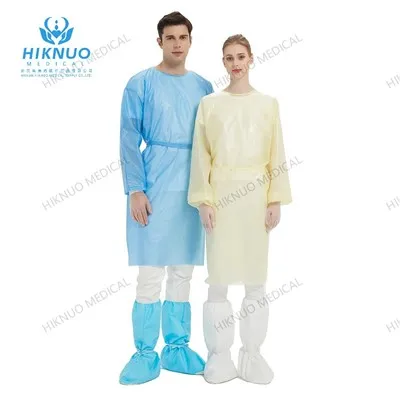
Our products include non-woven protective equipment, disposable masks, disposable isolation gowns, disposable hats, disposable shoe covers, disposable boot covers, etc. They are widely used in medical, dental, industrial, laboratory, health and beauty markets.
Professional Service
Our company is committed to building customer partnerships through strong relationships, providing high value, quality products and exceptional service through continuous process improvement. In addition, our products have been sold to more than 40 countries around the world and enjoy a good reputation in domestic and foreign markets.

Disposable face masks are designed to be worn once and then thrown away. They come in a rectangle shape and are meant to cover your nose and mouth. Disposable face masks are generally made of breathable material, which may be synthetic or a cotton mix. Their function is to cover the user's mouth, nose and jaw, providing a physical barrier to prevent the direct penetration of pathogenic microorganisms, body fluids, particles, etc.
Benefits of Disposable Face Masks
Protects You from Poor Air Quality
When air quality is poor due to pollutants, wearing a mask can protect your respiratory system and overall health. Masks can help you isolate many polluting gases and powders, such as gases from motor vehicles and industrial processes (carbon monoxide, nitrogen dioxide, and sulfur dioxide), ground-level ozone, particle pollution, etc.
01
Reduces Exposure to Allergens
Especially if you have pollen allergies, wearing a mask could decrease allergen exposure.5 A mask that covers your mask and nose can help filter out pollen or irritants. Masks also change the moisture and temperature level of the air you breathe in, further reducing allergy symptoms.
02
Prevents You from Getting Sick
Infectious diseases can spread from exposure to the droplets containing the germs that cause the diseases. Masks keep you from becoming sick by blocking droplets from actions like breathing, coughing, sneezing, or talking. For example, one research summary discussed studies concerning masks and COVID.
03
Protects Immunocompromised
Masks can protect immunocompromised people by reducing or preventing their exposure to germs that can cause serious illness. These people's immune systems don't work properly. Immune system dysfunction may be due to chronic diseases such as diabetes or cancer, or immune diseases such as AIDS.
04
Keeps You from Spreading Germs
Just like masks may prevent you from getting sick, they can also prevent you from spreading germs if you're already ill. Wearing a mask decreases the likelihood that you'll exhale and spread germs into the surrounding air.
05
Features of Disposable Face Masks

Protection
The protection and safety offered by disposable masks is optimal and very high. It should be borne in mind that this type of mask has always been used by medical professionals to protect themselves and their patients. Therefore, as long as we comply with hygiene and usage measures, the protection offered will be absolute.
Comfort
The flexibility offered by the fabric with which they are made and the adaptability to the shape of each face makes them one of the most comfortable types of masks for almost any action or activity.


Low Cost
In addition to offering protection equal to that of other masks on the market, disposable masks can be purchased at a much more economical price. Because its production technology is very mature, manufacturers' production costs can be controlled within a reasonable range.
Correct Fit
Most disposable face masks have an elastic band to adjust the product correctly to each person’s face. However, despite their snug fit, these types of masks tend to fit neither too tightly nor too loosely. Disposable hygienic face masks adjust perfectly to the shape of each face, thus achieving a correct position and protection.


Breathability
Since the disposable facial mask is made of breathable fabric, users will not feel stuffy or have difficulty breathing during use. Even if you wear it for a long time, you will not feel discomfort easily. But remember, disposable masks cannot be used indefinitely, nor can they be reused after cleaning. Generally speaking, disposable sanitary masks should not be used continuously for more than six hours.
Disposable Face Masks Specifications
|
Product Name |
Disposable Surgical Face Mask |
|
Country of Origin |
China |
|
Size |
17.5cm*9.5cm |
|
Type |
Level 1 ,level 2 or level 3 |
|
Packing specification |
Case size: 52cm*38*30cm |
|
Material |
Non-woven +melt-blown + non-woven layers. |
|
Color |
Blue |
|
OEM |
Accept OEM |
|
Application |
Safety Protection |
|
Logo |
Customized Logo Accept |
|
Sample |
Sample Offered |
|
Weight |
25+25+25g |
|
Country of Origin |
China |
|
Size |
17.5cm*9.5cm |

How to Wear a Face Mask the Correct Way?
Clean your Hands: Before putting on your face mask, wash your hands or clean them with sanitizer.
Grab the Mask by the Ear Strings: The cloth part of your mask is the part that would come in direct contact with the virus particles, so you should handle your mask by the ear strings. This also applies when taking off your mask.
Cover your Mouth, Nose and Chin with the Mask: Only covering your mouth with a face mask does not completely protect you from spreading or becoming infected with COVID-19, because droplets infected with the virus can settle in your mouth and nose.
Check for Gaps: A properly sized face mask will have minimal gaps under the chin and at the sides. Noticeable gaps between your skin and the mask can allow infected droplets to slip in and out.
When Removing Your Face Mask, Repeat Steps 1 and 2: You wear your mask to protect yourself from harmful germs. Not taking proper precaution when removing your face mask could actually undo all that work that your mask did for you.
Fold the Outside Corners Together: This keeps any infected particles on the outside of your mask from spreading throughout your home, car or wherever you take off your mask.
Three Common Levels of Disposable Face Masks
Level 1 Disposable Face Masks
Level 1 face masks provide low barrier protection and are for general use. While they do have good filtration properties for a face mask, unlike the level 2 respirators, they do not fit as tightly and securely. Level 1 face masks are normally for standard medical procedures and low-fluid cases. While they are cost-effective options, these masks can only resist 80 mm Hg to penetration by synthetic blood. In comparison to level 3 face masks which provide 160 mm Hg resistance.This means that in terms of liquid particles and filtration, level 3 face masks and even level 2 respiratory masks are better options for use in work environments and medical environments.
Level 2 Disposable Face Masks
Typically, level 2 face masks come in ratings that identify their effectiveness to filter out harmful particles. The disposable P2 and N95 face masks/respirators can filter extremely fine particles from the air to minimise exposure to smoke, poor air quality and respiratory diseases. A P2 Disposable Respirator is an example of a level 2 facemask. FFP2 Disposable Respirators are ideal for working environments in which harmful particles can be found in the breathing air in industries like cleaning, maintenance, construction or for medical professionals to protect themselves against liquid particles, fog, dust, and smoke, bacteria and aerosols.
Level 3 Disposable Face Masks
Level 3 disposable mask is very suitable for protection in environments with high risk of liquid exposure (splash or spray) to provide protection. The ASTM level 3 surgical mask includes 4 layers of structures, which can provide clinicians with the comfort, protection and breathability they seek. They are designed for fluid protection. The mask has adjustable nose and soft ear hanging, which is convenient to wear and increase comfort.
Types of Raw Material Used in Protective Face Masks
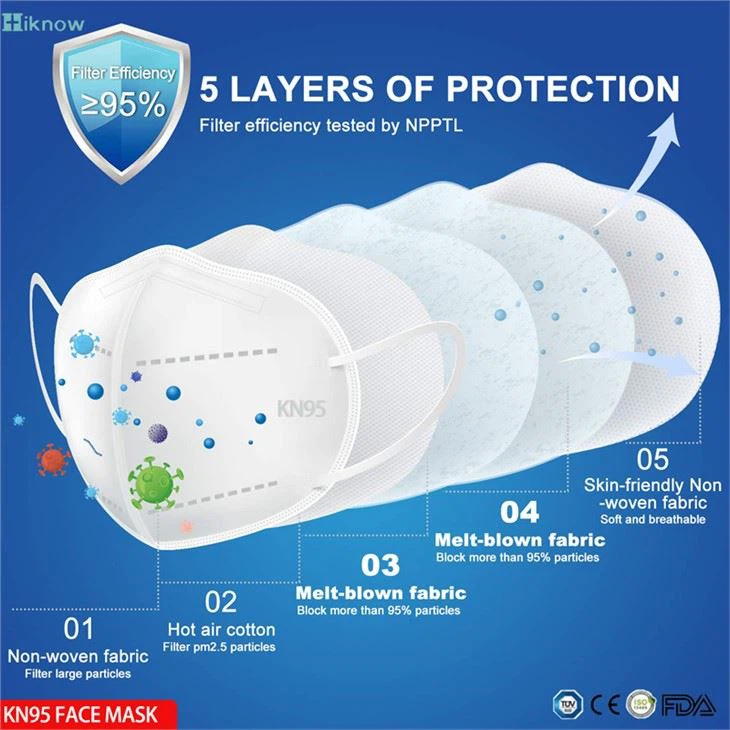
In disposable face masks, medical masks, and KN95/N95 masks, the nonwoven spunbond polypropylene materials are ideal for the outer and inner layers of the mask.The nonwoven spunbond polypropylene is a breathable material. This allows for splash resistance on the outer layer. It is useful as the inner layer because it is absorbent and whisks moisture away from the face.
The middle layer between the two pieces of nonwoven spunbond polypropylene is made of a nonwoven meltblown fabric. The meltblown fabric in mask production acts as the filtration mechanism between the layers of nonwoven spun-bonded polypropylene that helps to prevent the spread of germs. In addition to that, it supplies shielding, oil absorption, and heat insulation. It is ideal for filtering air and liquid particles making it a good raw material to incorporate into mask making. Masks without a filtration system cannot help to protect the mask wearer from the potential risk of infection. In some versions of the medical mask on the market, you may find that they incorporate a double-layered meltblown fabric for more support and protection. This is seen in the KN95 that has a 5-ply make-up where more protection is necessary.
We understand that all of these face masks are the same size while everyone has a different face and/or head shape, so some features help to adjust it to a customized fit via the elastic ear loop and the wire nose bridge. The elastic ear loop is made out of nylon and spandex material. It is a little roped strand that has enough give to make it a one-size-fits-all face mask. The nose wire bridge helps to create an adjustable fit by clamping around the nose as needed to hold it in place.
Types of Disposable Face Masks
Type I Face Masks
Type I masks have a BFE of 95%, filtering larger respiratory droplets during exhalation. Type I face masks can be used by people and patients to reduce the risk of spreading an infection to others. They are appropriate for use in all public areas and places where social distancing should be respected.
Type II Face Mask
Type II masks have a BFE of 98%, filtering larger respiratory droplets during exhalation. Type II face masks are appropriate for use in all areas where Type I face masks can be used while offering a higher level of protection. Along with Type IIR face masks, these are designed for use in hospital, medical, and care settings.
Type IIR Face Masks
Type IIR masks have a BFE of 98%, filtering larger respiratory droplets during exhalation, with a splash-resistant layer to protect from coughs and sneezes. They are appropriate for use everywhere Type I and II face masks are used, as well as close proximity environments such as hospitals, doctor’s surgeries, dental clinics, and care homes.
FFP1 Respirator Masks
FFP1 masks offer the minimum level of protection from this mask type, with 80% filtering efficiency. These masks are most commonly used to protect the wearer from breathing in solid dust particles like sand and sawdust when doing DIY activities. They are not effective at protecting against toxic substances, pollen, or infectious particles and bacteria.
FFP2 Respirator Masks
FFP2 masks provide 94% filtering efficiency, this is the minimum requirement as stated by the WHO from protection during the Covid-19 pandemic. They offer the same level of protection as the N95 mask that is used in the US. FFP2 masks do not have valves, which means their filtration system is built into the layers of the mask through which you breathe.
FFP3 Respirator Masks
FFP3 masks provide filtering efficiency of 99% and are recommended by the NHS for use in high-risk areas such as hospitals. FFP3 masks offer the highest level of protection against droplets and aerosols when worn correctly, they provide a substantially better level of protection than FFP1 and FFP2 masks, defending against solid and liquid aerosols.
How Long Should You Wear a Disposable Face Mask for?
As many people use disposable face masks, it is important to know how long to wear a disposable face mask for. Face mask users need to be aware of the factors affecting how long they should wear their mask since they contribute to general health and comfort. This article will give you information on how long to wear disposable face masks, along with the reasons why.
Why Does it Matter How Long You Wear Disposable Face Masks?
The purpose of disposable face masks is to protect you from contact with droplets and spray that could be contaminated with germs, bacteria, and viruses. Masks are designed to filter most of these particles from the air you breathe. Since Covid-19 is transmitted via airborne droplets and particles, many people need to continue to wear disposable face masks for a longer period. But if you work in any variation of the medical industry, wearing a face mask is something you’ve been doing for years. Additionally, the idea of a disposable mask has led to many people asking if disposable face masks can be recycled. Many people even ask how long can I wear a disposable face mask for and if a disposable face mask can be reused. Since the costs and usage of face masks add up, many individuals want to get the most out of their masks before disposing of them. However, it’s important to note that, since masks are designed to be disposable, they should not be used over and over indefinitely. They lose their effectiveness after a certain period and will no longer serve their purpose. Disposable face masks will fail to function if used beyond their specified duration. Even if they don’t have stains or damage, they may not be useful. For this reason, understanding how long to wear disposable face masks and why it matters is so important, given disposable face masks are the primary masks used by many people.
How Long Should You Wear a Disposable Face Mask for?
How long to wear a disposable face mask depends on several factors. Understanding these possible factors will help you better understand the ideal duration of how long you should wear a disposable face mask and know what has to be done to make the most out of your disposable face masks.
Factors Affecting How Long to Wear Disposable Face Masks Safely
One of the biggest factors in determining how long you should wear a disposable face mask is the type and quality of the mask. Here are some of the most common disposable face masks available:
●Surgical masks
●N95 masks
●Face masks with valves
●Fabric or cloth masks
Make sure you’re aware of the available masks and learn what kind of mask is right for you. Another factor in how long you should wear a disposable face mask is how you behave with your disposable face mask on. If you frequently touch the mask and move it around on your face, it raises the possibility of contact contamination or inhaling viral particles. These repetitive actions are a good indication that the disposable mask is no longer safe. Additionally, your activities while using your disposable mask are another factor in knowing how long you should wear a disposable face mask for. If you sweat a lot, your mask will get wet and lose some of its electrostatic characteristics. It will retain fewer particles and lose some of its air permeability, which makes it less breathable.
So - How Long Can I Wear a Disposable Face Mask for?
In March 2020, the World Health Organization recommended using a disposable face mask for four hours. The recommended four-hour maximum period of the mask was based on a 2009 study that found that after four hours, healthcare professionals' acceptance and tolerance of the mask started to decline. Many countries accept and follow this recommendation. Making sure that you change your disposable mask every four hours will ensure that you’ll have fresh protection against Covid-19 and other viruses. However, a disposable face mask's capacity to protect you against viruses could last up to a day, depending on its quality. If you wear the face mask properly, don't sweat, and are disciplined about not touching your mask too much throughout the day, a good quality disposable face mask can last a day. It should be thrown away after.
Our Certificate
Our company has obtained the following certificates:

Our Factory
The following are our factory:

Ultimate Guide
Q: How long can I wear a disposable face mask before replacing it?
Q: Are disposable face masks effective at filtering out particles?
Q: How do I properly dispose of a used face mask?
Q: Can I wear a disposable face mask in hot or humid weather?
Q: What are the best practices for storing our supply of face masks?
Q: Are disposable face masks safe to wear for extended periods?
Q: Can I wear a disposable face mask if I have sensitive skin?
Q: Which face masks, barrier face coverings, and surgical masks are medical devices regulated by the FDA?
Q: Do face masks and barrier face coverings provide protection from corona virus?
Q: Can face masks and barrier face coverings be cleaned and reused during COVID-19?
Q: Are surgical masks the same as N95 masks?
Q: What are EN-149: 2001 masks?
Q: How do I choose which mask to purchase?
Q: Can KF94 masks be used to protect against Haze?
Q: Which side is out on a disposable face mask?
Q: Is the N95 face mask an adequate protection against haze? Does it protect against PM2.5?
Q: How to choose a face mask?
●Masks with at least 2 to 3 layers of fabric. As a general guide, the material should not be see-through when held against light.
●Layers should preferably be made with different fabrics, including:
-Water-repellant outer layer
-Middle filter layer to remove particulates - this can be disposable filter inserts
-Absorbent inner layer to absorb droplets from wearer’s mouth
●Fabrics with better filtering efficiency
●Fabrics with enough permeability to allow breathing
●Appropriate fit around the face and chin, with complete coverage of the nose and mouth, to prevent leakage of exhaled droplets
Do not choose masks with exhalation valves, as these allow the escape of exhaled droplets from the wearer and exposes others to the risk of infection.
Q: What mask to wear for air pollution?
Q: What are surgical masks?
Q: Are face masks useful?
We're professional disposable face mask manufacturers and suppliers in China, specialized in providing high quality products and service. We warmly welcome you to wholesale customized disposable face mask made in China here from our factory.