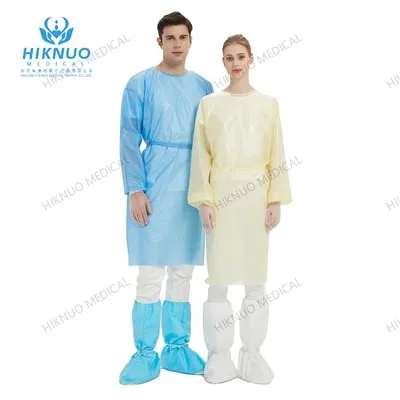
 In the demanding world of healthcare, the safety of the materials that touch a patient's skin is non-negotiable. As a manufacturer specialized in medical-grade supplies, we frequently receive inquiries from procurement officers and clinical managers asking one fundamental question: "Are nonwoven fabrics really safe for use in disposable medical products?"
With the global reliance on high-performance materials for surgical gowns, masks, and wound dressings, the answer is a definitive yes. However, understanding why these materials are safe-and how they are engineered to meet stringent medical standards-is critical for any organization making large-volume purchasing decisions.
Understanding the Engineering Behind Nonwoven Fabric
Unlike traditional textiles that rely on the interlacing of warp and weft yarns, nonwoven fabric is created through a process that bonds fibers directly. By using mechanical, chemical, or thermal processes (such as heat bonding), manufacturers can create a material with a uniform, controlled structure.
From a production safety standpoint, this process is highly predictable. Because we are not dealing with the complexity of weaving, we have total control over the raw materials, the fiber distribution, and the resulting porosity of the fabric. This allow us to engineer materials that provide an optimized barrier against contaminants while maintaining essential breathability. Whether we are producing an SMS (spunbond-meltblown-spunbond) structure for surgical drapes or a soft spunlace material for patient wipes, the manufacturing environment is optimized to ensure that no harmful residues remain in the end product.
Safety Through Quality Control and Compliance
For medical supplies, safety is synonymous with compliance. When we manufacture nonwoven medical textiles, we don't just assemble fibers; we adhere to international regulatory frameworks designed to protect the end-user.
For instance, the EU REACH regulation requires rigorous testing for hundreds of chemical substances, ensuring that nothing toxic migrates into the human body. Similarly, in the Chinese market and abroad, standards such as GB/T 38014-2019 strictly limit heavy metal migration to less than 0.01mg/kg. When sourcing disposable medical supplies, you should always ask your manufacturer for certificates of analysis (COA) or biocompatibility test reports. These documents confirm that the nonwoven raw materials meet the necessary safety thresholds for skin contact and long-term use.
Professional-grade nonwovens undergo extensive cytotoxicity, sensitization, and skin irritation tests. In the field of hygiene-such as in baby diapers-medical-grade nonwoven fabrics have been clinically proven to reduce the incidence of red rashes by up to 67% because they are engineered to be inert, hypoallergenic, and non-abrasive.
Why Nonwovens Lead in Infection Control
The shift toward disposable medical gear has been largely driven by the superior barrier performance of nonwoven materials. In the middle of the COVID-19 pandemic, the world saw how melt-blown nonwoven layers became our first line of defense. These layers must pass the double test of BFE (bacterial filtration efficiency) and PFE (particle filtration efficiency), with standards often requiring performance of 95% or greater.
Because our nonwoven products are designed for single-use, they fundamentally eliminate the risk of cross-contamination-a hurdle that traditional cotton-based fabrics struggle to clear. By using a fresh, sterile-packaged item for every patient or procedure, hospitals significantly reduce the risk of hospital-acquired infections (HAIs). This is why you will find our, and similar, high-quality nonwovens in virtually every operating room, ICU, and emergency department globally.
The Role of Customization in Performance
One of the greatest benefits of modern nonwoven manufacturing is the ability to customize the "basis weight" (gsm - grams per square meter) of the fabric. Not every application needs the same density. A surgical drape intended for heavy fluid exposure requires a different structural composite than a light facial mask.
By adjusting the fiber density and orientation, we can create materials that are:
- Highly Absorbent: Essential for wound dressings and surgical sponges.
- Water-Repellent: Critical for keeping medical personnel dry during long surgical procedures.
- Breathable: Ensuring comfort for nurses and surgeons who wear gowns for extended shifts.
When purchasing in bulk, discussing your specific application with your manufacturer is key. We can calibrate the non-woven production process to provide exactly the barrier, fluid resistance, or drainage capability your facility requires, ensuring you aren't overspending on materials that are "too heavy" while maintaining the safety profile your patients deserve.
Sustainability and Future-Proofing Procurement
A common concern among large-volume buyers is the environmental impact of disposable items. It is important to note that the industry is evolving. Modern manufacturing now focuses on life-cycle sustainability. For example, yutaitextiles.com reports that the carbon emissions of a nonwoven shopping bag are significantly lower than traditional cotton alternatives, and many industrial nonwoven products are now being designed with controlled degradation periods.
If your organization has strict ESG (Environmental, Social, and Governance) goals, you can work with us to source eco-friendly nonwoven options that utilize recycled polypropylene or natural blends, like cotton-based spunlace, which provides a biodegradable option without sacrificing the safety standards required by graminton.com.
Final Recommendations for Procurement Professionals
When you are ready to place a large-volume order, keep these three practical tips in mind:
- Request Full Transparency: Ensure your manufacturer can provide documentation on their nonwoven fiber sources and any chemical binders used in the bonding process.
- Define Your Performance Metric: Don't just ask for "nonwoven fabric." Specify your needs for fluid resistance, tensile strength, and bacterial filtration efficiency.
- Evaluate for Scalability: As seen with the rapid scaling of mask production in 2020, reliable manufacturers must have the capacity to meet fluctuating demand without compromising on the quality of their nonwoven material.
At the end of the day, the safety of your medical supplies rests on the integrity of the material. By choosing high-quality, certified, and appropriately engineered nonwoven fabrics, you are ensuring the best possible outcome for your patients and your staff.
Are you looking for a reliable partner for your medical supply needs? Reach out to our team today to discuss your next bulk order and see how we can tailor our nonwoven production to meet your specific clinical requirements.